
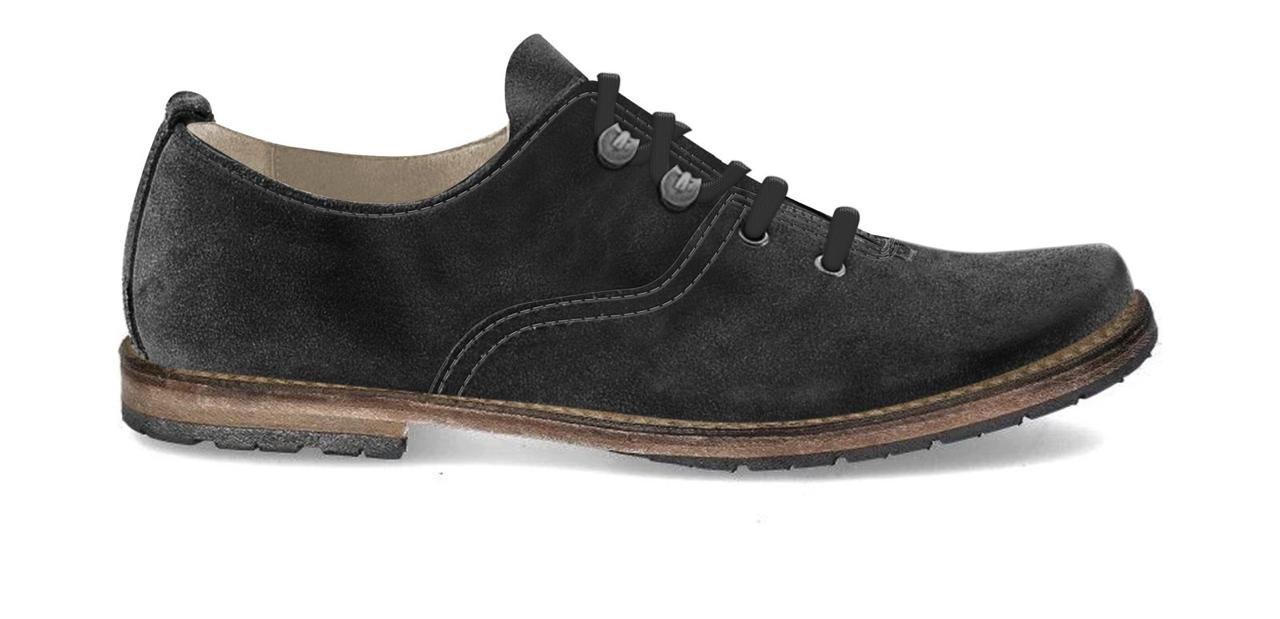
Haferl Shoes vs Formal Leather Shoes: Which Fits Your European Retail Range?
Choosing between Haferl shoes and formal leather shoes is a buying decision about the customers you serve. A traditional-dress retailer may need a recognisable Bavarian-inspired collection, while a businesswear shop may prioritise footwear that works with its formal clothing range. A wholesaler serving both channels may need a carefully planned mix.
This guide compares the two categories across design, fit, cost, sales channels and order planning. Use it to prepare a buying brief, ask better supplier questions and decide where each style belongs in your European retail range.
Quick answer: Haferl shoes vs formal leather shoes
- Haferl shoes: Start here when your brief centres on Bavarian-inspired styling, Trachten clothing or a specialist traditional-dress collection.
- Formal leather shoes: Start here when your customers need footwear for businesswear, ceremonies or a formal clothing range.
- A mixed collection: Consider both when your sales channels support clearly different customer needs.
- The deciding test: Match approved samples, commercial terms and the proposed assortment to your own demand evidence.
1. The footwear comparison explained
The distinction begins with the collection’s purpose. Haferl footwear belongs in a brief built around Bavarian-inspired or traditional-dress styling. Formal leather footwear belongs in a brief built around the appearance required by a business, occasion or dress-shoe customer.
These category descriptions do not settle every product question. Fit, material choice and workmanship depend on the specific model. Compare actual specifications and samples rather than assuming that one category is automatically more comfortable, durable or valuable.

2. Haferl shoes vs formal leather shoes: design and visual identity
For a Haferl collection, your brief may focus on the shoe profile, fastening, visible seams and relationship to the traditional clothing you sell. Identify these details with reference photographs and ask which models match the intended appearance.
For formal leather footwear, describe the dress level and clothing combinations you want to support. Include the preferred toe profile, colour and finish. Keep design language separate from manufacturing origin: a Bavarian-inspired shoe is not necessarily made in Bavaria.
3. Haferl shoes vs formal leather shoes: the wholesale cost comparison
There is no reliable category-wide answer to which costs less. Compare quotations for the actual model, material specification, size quantities and packaging you intend to buy. A price difference may reflect a different construction, order quantity or included service.
Ask suppliers to separate product costs from sample development, branding, packaging and delivery responsibilities. Record the currency, quotation validity and payment stages. Compare equivalent offers before deciding which range fits your buying budget.
4. Fit and size planning
Request a size chart for each model, with an explanation of what its measurements represent. Assess toe room, heel hold, instep pressure and fastening adjustment using appropriate sample sizes and the socks your customers are likely to wear.
A size mix that works for an existing formal shoe may not suit a new Haferl model. Use sales and returns evidence alongside sample feedback. Confirm whether minimum quantities apply per size, per colour or across the complete order.
5. Customer occasions and use
Ask what brings the customer to your shop. A Trachten outfit or a specialist seasonal collection gives a Haferl style a clear merchandising role. Business clothing, ceremonies and formal occasions may point towards a dress-shoe offer.
Do not stretch a category description into an unsupported performance claim. If you intend to describe a shoe as suitable for prolonged standing, wet conditions or a particular activity, obtain the appropriate product evidence for that model.
6. Materials and construction
Specify the upper, lining, footbed and outsole separately for both categories. Ask the supplier to identify the proposed materials and sole attachment method. A broad description such as “leather footwear” cannot replace a component-by-component specification.
Inspect the samples for visible finish, seam placement, fastening and pair consistency. If you request a substitution or design change, document it before approval. The accepted sample and written specification should describe the same product.
7. Sales channels and assortment
A specialist traditional-dress retailer can evaluate Haferl styles against its existing clothing assortment. A general footwear retailer should decide how a Bavarian-inspired model adds a distinct customer choice alongside formal and casual products.
Give each style a role in the collection, then build the colour and size quantities around that role. Avoid adding similar models solely to increase the catalogue count. Track sales by style, colour and size so the next order reflects actual demand.
8. Care and product information
Request care guidance suited to the approved materials and finish. Prepare descriptions and photographs that match the goods being ordered. Record the size guidance, component details and product identifiers your customer-service team will need.
Keep general leather-care advice separate from a model-specific recommendation. Do not promise that a shoe is waterproof, repairable or compatible with a particular treatment unless the supplier has confirmed the relevant information.
9. Seasonality and repeat orders
Where a Haferl range supports a seasonal event or clothing collection, work backwards from your retail-ready date. Include sample review, production, transport and incoming checks. Request current estimates for the proposed quantities.
Formal footwear may serve several selling occasions, but its demand still depends on your customers. Discuss replenishment conditions for both categories, including repeat-order minimums and whether materials or construction need reconfirmation.
10. Haferl shoes vs formal leather shoes: how to choose your range
Use these questions to turn the comparison into a buying decision:
- Who is the customer? Identify the clothing, occasion or collection the footwear needs to support.
- What demand evidence do you have? Review sales, returns and customer requests.
- Which samples fit the brief? Assess appearance, components and fit separately.
- What is the stock commitment? Calculate quantities by style, colour and size.
- When must stock be ready? Confirm the timeline and its dependencies.
| Factor | Haferl footwear | Formal leather footwear |
|---|---|---|
| Collection focus | Bavarian-inspired or traditional-dress styling | Businesswear and formal-occasion styling |
| Design brief | Profile, fastening and traditional clothing match | Dress level, profile and finish |
| Fit approval | Model-specific samples and sizing | Model-specific samples and sizing |
| Wholesale cost | Depends on specification and order terms | Depends on specification and order terms |
| Stock planning | Assess specialist and seasonal demand | Assess demand across your selling occasions |
| Best starting point | A buyer brief for Trachten or Bavarian collections | A buyer brief for a formal footwear collection |
11. Discussing your range with SN Overseas
SN Overseas presents Bavarian-inspired Haferl and Trachten footwear alongside formal leather shoes, casual shoes and boots. Its website identifies the business in Agra, India, and invites enquiries from retailers, wholesalers and brands.
- Compare collection options: Review the footwear portfolio and identify reference styles.
- Prepare a focused enquiry: Send materials, colours, sizes, estimated quantities and destination details.
- Confirm order-specific terms: Ask about samples, minimum quantities, customisation options and current production estimates.
Use the reply and sample review to assess whether the proposed model fits your brief. Confirm the specification and commercial terms before placing an order.
12. Frequently asked questions
Are Haferl shoes or formal leather shoes cheaper to buy wholesale?
The answer depends on the model, materials, quantities and included costs. Request comparable quotations for your actual buying brief rather than assuming one category is always cheaper.
Which category suits a traditional-dress retailer?
Haferl and Trachten styles are a useful starting point for a Bavarian-inspired clothing collection. Choose the final model through design and fit approval.
Can a European retailer stock both categories?
Yes, if each has a clear role in the assortment and enough customer demand to justify the stock commitment. Plan and measure the two ranges separately.
Does Bavarian-inspired footwear mean German-made footwear?
No. Styling and manufacturing origin are different details. Confirm the origin of the specific product; SN Overseas describes its Bavarian-inspired collection as made in Agra, India.
What should buyers include in a sample enquiry?
Provide reference styles, preferred materials and colours, sample sizes, proposed order quantities and the destination country. Explain which design and fit decisions the sample needs to support.
Does SN Overseas offer both types of footwear?
Its website presents both a Bavarian-inspired collection and formal leather footwear. Enquire about the current options and specifications for the styles you want to assess.
Which footwear belongs in your range?
The better choice is the one supported by your customer brief, sample assessment and order plan. Haferl footwear gives a Bavarian-inspired collection a distinct direction; formal leather footwear serves a different merchandising brief. A mixed range can work when both roles are clearly defined.
Explore the SN Overseas collection and contact the team with your footwear requirements. Start with a clear brief, compare model-specific information and approve the final details before ordering.
